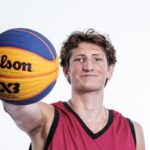
Author: Finn Addy

  • Money Tree

    The Finnaddy money tree

    Every money page and hub on finnaddy.com, and the posts that feed each one

    Drawn from the live internal links across 7 published posts and 6 pages, crawled 16 August 2026. Nothing is hand-placed: a branch is thick because posts link to it, and bare because none do.

    Read it bottom-up.Roots — off-site proofTrunk — the domainHow we do it — the method hubsBare or broken — needs a leafBranch thickness = posts feeding it

    Swipe the diagram sideways, or read the same tree as text below it.

    The Finnaddy money treeA tree diagram of finnaddy.com. The trunk is the domain, each branch is a money page or definitive hub, and each leaf is a blog post that links up to it. The full structure is repeated as a text outline directly below this diagram.ON YOUR SITE — what you controlOFF YOUR SITE — what the market says (the roots)bare — no posts link herePAGEAboutBare0 posts feed this4PAGEConnectThin4 posts feed thisbare — no posts link herePAGESponsors & BrandPartnershipsBare0 posts feed thisbare — no posts link herePAGEXmlrpc.PhpBare0 posts feed thisfinnaddy.com7 posts · 6 pages

    The same tree in text — every node is a live link

    How we do it — the method hubs

    The definitive articles. Each one owns a concept, and every post that demonstrates that concept links up to it.

    AboutBare

    page · 0 posts link here

    No posts link here yet.

    Sponsors & Brand PartnershipsBare

    page · 0 posts link here

    No posts link here yet.

    Xmlrpc.PhpBare

    page · 0 posts link here

    No posts link here yet.

    Method: every published post and page was fetched through the WordPress REST API and its outbound internal links extracted from the rendered body. A leaf counts once per post, only when that post links to the branch URL. Redirects were followed and reported rather than silently merged. Crawled 16 August 2026.

    Findings — each defect names a department

    Defect Where Routes to
    Bare branch About, Sponsors & Brand Partnerships, Xmlrpc.Php Content — one customer story per bare offer
    Shallow roots finnaddy.com Entity / authority — Knowledge Panel and sameAs

    Action list — 16 August 2026

    Run this on your own site

    Two doors, one diagnosis

    This tree is a scan, and a scan is only worth running if it tells you which department to walk to. Both doors below start from the same diagnosis. Take the skill file and run it yourself, or have us run it and hand you the findings — either way the routing table underneath says where each finding goes.

    1 · Do it yourself

    Take the skill file and run it

    A complete, runnable skill file — the five layers, the seven-step method, the six defects, and the nine-check QA gate. Hand it to Claude, ChatGPT, Gemini or any agent with read access to your site. Apache-2.0: copy it, fork it, ship it inside your own product.

    Download map-your-money-tree.skill.md

    2 · Have it run for you

    Have an agent run it with you

    The scan is only worth running if it tells you which department to walk to. Start at About — we crawl finnaddy.com, draw the tree, name the defects with the exact URLs and counts, and route you to whichever of the things below you actually need.

    Go to About

    What the scan finds, and which department it routes to

    What your tree shows What it means Where it goes
    A bare branch A live money page with zero posts linking to it. Nothing you have published has ever pointed a visitor at the thing you sell. About
    A split URL Two live pages for one offer — usually a page and a post. Internal links divide between them and neither ranks as well as one would. About
    Redirect tax Dozens or hundreds of internal links pointing at a URL that 301s somewhere else. It works, so nobody fixes it. About
    A broken target Internal links pointing at a 404. Invisible in analytics, because nobody clicks a link they cannot see. Quick Audit
    An inverted tree Leaf counts fall as price rises. The cheapest offer carries the most proof and the most expensive carries none. About
    A canopy with no branches Hundreds of posts linking to each other and almost nothing structural. Looks productive, converts nothing. Personal Brand Site Builder
    Shallow roots No Knowledge Panel, no consistent sameAs, no third-party corroboration. The canopy is fine; the soil is loose. Knowledge Panels
    map-your-money-tree.skill.md — the full skill file, verbatim (for agents and for copy-paste)
    ---
    name: map-your-money-tree
    description: Draw any website as a money tree — trunk (domain), limbs (offer groups), branches (money pages and definitive hubs), leaves (posts that link up to them) — measured from the site's real internal links, then diagnose the six defects a sitemap hides and output a dated publishing plan. Use when someone asks "which of my pages actually make money", "why isn't my content converting", "map my site", "audit my internal links", or when a monthly MAA needs a structural section.
    author: Dennis Yu — BlitzMetrics / Local Service Spotlight
    license: Apache-2.0
    version: 1.0 (2026-08-15)
    references:
      - https://blitzmetrics.com/money-tree/
      - https://blitzmetrics.com/seo-tree/
      - https://blitzmetrics.com/money-pages-vs-blog-posts/
      - https://blitzmetrics.com/maa/
      - https://blitzmetrics.com/9-triangles-framework-scalable-home-service-businesses/
      - https://localservicespotlight.com/quick-audit/
    ---
    
    # Map Your Money Tree
    
    **Use this when** you need to know which pages on a site actually earn, and which of the
    content already published is feeding them. Not "how much traffic does this page get" —
    *what is connected to what, and in which direction.*
    
    This is the structural half of [MAA](https://blitzmetrics.com/maa/). The leaf counts are
    the Metrics. The bare and split branches are the Analysis. The publishing list at the end
    is the Action. Redraw it monthly and the delta is the report.
    
    ## The one idea
    
    **A leaf counts only when it actually links.**
    
    Not when it is topically related. Not when it sits in the right category. Not when someone
    meant to link it. The link is the measurement; everything else is a plan. Every number this
    skill produces must be reproducible by re-running the crawl.
    
    ---
    
    ## The five layers
    
    | Layer | What it is | How you know |
    |---|---|---|
    | **Root** | Off-site proof of the entity: Knowledge Panel, Wikidata, LinkedIn, YouTube, podcast appearances, press, review profiles. | It is not on the domain and you cannot edit it directly. |
    | **Trunk** | The domain and its home page — the entity home. | It is the URL you would put on a business card. |
    | **Limb** | A group of branches sharing an audience or a job — the offers, the method, a vertical. | It is how the site's own services page already groups things. |
    | **Branch** | A money page, or a definitive article that owns a concept. | Someone converts on it, or it is the one canonical page for a topic. |
    | **Leaf** | A post that links **up** to a branch. | It is dated, it flows through a feed, and its body contains a link to its branch. |
    
    Roots and trunk are **Why**. Limbs and method branches are **How**. Money branches are
    **What**. Leaves are **Proof**. A stranger — or a language model — should be able to read
    all four off one page.
    
    ---
    
    ## Inputs
    
    - The domain.
    - Read access to every published URL and its **rendered** body (not raw — page-builder and
      shortcode markup must be expanded so the links inside are visible).
    - The site's own services page and main navigation, for the branch list and its grouping.
    - Optional: the previous run's tree, for the delta.
    
    ---
    
    ## Procedure
    
    ### 1. Inventory every published URL
    Posts and pages both, with id, URL, title, publish date, and rendered body.
    
    On WordPress:
    ```
    GET /wp-json/wp/v2/posts?per_page=100&page=N&status=publish&_fields=id,link,title,content,date
    GET /wp-json/wp/v2/pages?per_page=100&page=N&status=publish&_fields=id,link,title,content,date
    ```
    Page until the `X-WP-TotalPages` header runs out. On any other stack, use a crawler that
    returns rendered HTML. De-duplicate by (type, id) — retried requests double-count silently.
    
    ### 2. Extract internal links from every body
    Match `href` values on the site's own host. Normalise: drop the query string and fragment,
    force a trailing slash, lower-case the host. **Make the set unique per source page** — a
    post linking to the same branch five times is one leaf, because the first link is the one
    that carries the value.
    
    ```js
    const RX = /href="https?:\/\/(?:www\.)?example\.com(\/[^"#?]*)/g;
    const outs = [...new Set([...html.matchAll(RX)].map(m => m[1].replace(/\/+$/,'') + '/'))];
    ```
    
    For a personal brand site, also match the company domains — its money pages usually live
    on another host, and they still count as branches.
    
    ### 3. Build the inbound index
    Invert the map: for every URL, the list of posts and the list of pages that link to it.
    Count them **separately**. Theme headers and footers are pages linking to pages; only body
    links from posts are leaves.
    
    ### 4. Name the branches from the site, not from memory
    Take the money pages off the services page and the main navigation, in the grouping those
    pages already use. Add the definitive articles — the pages that own a concept. Do not
    invent a tidier taxonomy than the one the site presents to a visitor: if your tree
    disagrees with the navigation, the tree has just found its first defect.
    
    ### 5. Resolve redirects and duplicates before counting
    Request each branch URL and follow the chain. Merge redirected URLs into one branch and
    **report the merge** rather than hiding it. Two live 200s for one offer is a split branch,
    not two branches. This is the step everyone skips and where most findings are.
    
    ### 6. Draw it to scale
    Branch thickness and foliage density from the leaf count on a **square-root** scale, so a
    300-leaf branch does not visually annihilate a 30-leaf one. Bare branches drawn bare.
    Nothing placed by hand — if the drawing is prettier than the site, the drawing is lying.
    
    ### 7. Publish it on the site it maps
    As a live page with every node a real link — never a screenshot. Ship three synchronised
    forms on the same URL: the diagram (inline SVG), the identical structure as a **visible**
    text outline, and `ItemList` JSON-LD naming each branch, its role, its content type and its
    inbound count. The picture is for humans; the other two are for agents.
    
    ---
    
    ## The six defects — and where each one routes
    
    Diagnosis is worthless without a destination. This is a scan that names the department.
    
    | # | Defect | What it looks like | What it costs | Routes to |
    |---|---|---|---|---|
    | 1 | **Bare branch** | A live money page with zero posts linking to it | Nothing on the site has ever pointed a visitor at the thing you sell | Content — one customer story per bare offer |
    | 2 | **Split branch** | Two live URLs for one offer (usually a page and a post) | Internal links divide; neither ranks as well as one would | Plumbing — pick one, 301 the other, consolidate |
    | 3 | **Redirect tax** | Many internal links pointing at a URL that 301s | Every link takes the slow road; often includes the main nav | Plumbing — rewrite links to the destination |
    | 4 | **Broken target** | Internal links pointing at a 404 | Invisible in analytics, because nobody clicks a link they cannot see | Plumbing — restore or repoint |
    | 5 | **Inverted tree** | Leaf counts fall as price rises | The cheapest offer carries the most proof; the most expensive carries none | Strategy — decide what you are actually selling |
    | 6 | **Canopy with no branches** | Hundreds of posts linking to each other and almost nothing structural | Looks enormously productive, converts nothing | Personal brand — wire the proof to an offer |
    
    Also check the roots. A tree with no off-site proof — no Knowledge Panel, no consistent
    `sameAs`, no third-party corroboration — is standing in loose soil no matter how good the
    canopy looks. That routes to entity/authority work.
    
    ---
    
    ## The QA gate — nine checks, all must pass
    
    A wrong tree is worse than no tree, because people act on it.
    
    1. **Every node resolves.** Status recorded for each branch; no 404s; every 301 shown as a redirect rather than silently followed.
    2. **Counts are reproducible.** Re-run the crawl; identical numbers. Drift means the extractor is matching something other than links.
    3. **Counts are unique per source.** One post linking three times counts once.
    4. **Navigation excluded.** Only body links from posts are leaves.
    5. **No branch invented.** Every branch appears in the site's own navigation, services page, or definitive-article set.
    6. **No money page missing.** Cross-check against the services page and main menu. A money page absent from the tree is the worst error — an invisible bare branch reads as a branch that does not exist.
    7. **Duplicates consolidated.** Split URLs appear as one branch, flagged, with both URLs named.
    8. **Text outline matches the diagram.** Same nodes, counts and order — that is what agents and screen readers read.
    9. **Date and method stated.** A tree without a crawl date is a claim, not a measurement.
    
    ---
    
    ## Output
    
    1. **The diagram** — inline SVG, every node an anchor, light/dark, no runtime JS.
    2. **The text outline** — visible, nested, live links, counts, health flags.
    3. **The schema** — `ItemList` JSON-LD, one entry per branch.
    4. **The findings** — the defects above, each with the specific URLs and counts.
    5. **The action list** — dated, ordered by cost-to-fix, one line per bare branch.
    6. **The delta** — versus the previous run. Any branch still bare after a redraw is a branch nobody has decided to sell.
    
    ## Definition of done
    
    - Every branch on the services page and main nav appears in the tree.
    - Every count is reproducible and every URL resolves or is flagged.
    - The page carries diagram + outline + schema on one URL.
    - Every defect names a destination, not just a problem.
    - The next publishing action is unambiguous to someone who did not run the audit.
    
    ## Cadence
    
    Monthly on an active site. The value is in the delta, not the snapshot. A metric you look
    at once is a screenshot.
    
    ---
    
    *Method: <https://blitzmetrics.com/money-tree/> · Framework: <https://blitzmetrics.com/seo-tree/> ·
    Page-versus-post rule: <https://blitzmetrics.com/money-pages-vs-blog-posts/> ·
    Want it run for you: <https://localservicespotlight.com/quick-audit/>*
    
  • Breaking Down My Best Dunk Session Ever

    This one is a reaction video. Dylan Haugen and I sat down for the Dunk Talk channel and watched back the session where I hit my first under-both dunk, which is easily the best session I have ever had. We had both just gotten our first under-both, so it was a fun one to break down. The full reaction is at the top of this page. Here is what actually went into that day.

    How I Set the Day Up

    Nothing about the training was fancy. It was general strength work, deadlifts and half squats, and I got noticeably stronger. The difference was the rest going in.

    “I rested like a week, had an all right session, rested another four days, and then I was feeling really good right before I left the house. I told my mom the best jumping day ever.”

    Finn Addy

    I was so sure it was going to be a big day that I said it out loud before I even warmed up.

    “Walked in the gym, I was with my brother, and I was like, I think I’m about to jump like 44 inches right now. And he laughed.”

    Finn Addy

    For the record, my brother is a 6’3″ one-foot jumper who used to be a powerlifter and squatted 585, so him laughing meant something. The adrenaline was already there before anything else. I was shivering in the car, wanting to dunk that badly. I will also be honest about the caffeine, because it was a lot: around 700 milligrams at 7 p.m., which is part of why I did not get to bed until 5 a.m.

    The Right Gym, the Right Rim

    The setting was perfect. It is my favorite gym, a 10 and a half foot rim with the exact amount of give I like, and I was dunking with a college basketball team that was going crazy from the very first jump. That kind of crowd energy is a real thing. My second jump of the day was a two-foot pump dunk, first try, and my two-foot has been getting stronger to the point where it surprises even me.

    When I feel like that, everything comes on the first attempt. Being fresh does not just help your legs, it helps your hands and your hand speed too, and that is what makes the hard dunks possible.

    The Under-Both

    The under-both is the dunk I had chased forever, and on this day it came out clean. Watching it back with Dylan, his reaction said it better than I could.

    “That was one of the craziest wins I’ve seen. Honestly, I don’t know why more one-footers don’t try under-both, because you made it look easy.”

    Dylan Haugen

    The frustrating part of being a one-foot jumper is that a day like this only comes around about once a month. When it hits, you have to make it count, which is exactly why filming your sessions matters so much. This whole breakdown only exists because the session got recorded, which is the case the Dunk Talk crew makes in why every dunker should make long-form content.

    Right after we filmed this reaction, Dylan and I recorded a full podcast episode about the under-both and the rest of my year, which you can read in how I hit my first under-both dunk. The session itself is in the video above. Follow along on Instagram @finnaddy1 and on YouTube, or reach me through my Connect page.

  • How I Hit My First Under-Both Dunk

    Episode 53 of the Dunk Talk podcast is the one where Dylan Haugen and I talk through hitting my first under-both and everything that led into it. We had just filmed a reaction to that session right before, so this episode is more about the road to it, including the setback that almost wrecked the whole run. The full conversation is at the top.

    The Knee Blowup in Vegas

    Right before all of this, I went to Vegas feeling as good as ever. My two-foot was the best it had ever felt in warmups. Then it fell apart fast.

    “Probably like three, four jumps in, my knee just kind of exploded, so I had to cut the session really early.”

    Finn Addy

    I got maybe six jumps off one foot that whole day before the tendon in my knee shut me down. It was the kind of thing that makes you wonder if the good sessions are even coming back.

    “That was the first week in the past year that I had to take off from jumping. No jumping at all.”

    Finn Addy

    What Actually Fixed the Knee

    I built back slowly. A week completely off, then isos, then a few weeks of short two-foot sessions, then two-foot with five one-foot jumps, then ten, and eventually full one-foot sessions again. The single biggest thing for my knee was not the isos, it was slow leg extensions.

    “Those feel way better than isos to me. At the end of every workout I do three or four sets, three seconds up, four seconds down. I don’t think I’ll ever take them out of my program.”

    Finn Addy

    That is the honest reality of being a one-foot jumper once you get strong enough. You start jumping high enough that the knee pain shows up, and you go from dunking two or three times a week to getting maybe one real session. A lot of the job becomes knowing when to cut a session and doing the boring things that keep you healthy.

    Getting Bigger Without Losing the Bounce

    One thing that surprised people is that I put on real weight and kept jumping my best. Better sleep and better eating changed my body composition faster than anything.

    “I weighed in at 175 yesterday. At Dunk Camp I was like 160, maybe under. So I’m up 15 pounds and still jumping my best.”

    Finn Addy

    As long as it is muscle, it does not seem to hurt the jump. I will still cut a little before a big contest, but only when I am chasing my absolute highest number.

    The Under-Both, and What’s Next

    Once my one-foot bounce came all the way back, the under-both finally happened. The biggest lesson I took from chasing it is simple: try it early in the session when you are fresh, not at the end when you are cooked. From here my list is long, but the headline goal is testing a 45 at The Dunk Camp, which would put my touch at 11 foot 10, plus a 360 behind the back and eventually a double Eastbay.

    If you want the year that set all of this up, I recapped it in my 2024 as one of the most improved dunkers. The full episode is in the video above. Follow the journey on Instagram @finnaddy1 and on YouTube, or reach me through my Connect page.

  • My 2024: From 500 Followers to Pro Dunker

    I went back on the Dunk Talk podcast with Dylan Haugen for episode 43 to recap what ended up being the biggest year of my life. The title of the episode called me one of the most improved dunkers of 2024, and looking at where I started versus where I finished, that is fair. The full conversation is at the top of this page.

    Where the Year Started

    At the start of 2024 almost nobody knew who I was. One contest changed the entire trajectory.

    “Start of 2024 I had like 500 followers on Instagram, was an all right dunker but definitely nothing crazy. Went to Dunk Camp, won the 10-foot contest, that ended up sending me to the FIBA contest, which basically started everything for me down the line.”

    Finn Addy

    Before that camp I did five months of training completely on my own. I had watched so much jump-training content that I had a decent idea of what I was doing, and I added about three inches to my vertical in those five months. After I won, I joined THP for a couple months, and once I met Jordan Kilganon I moved onto his Jump Master X program, which is where I have been since.

    FIBA, Then a Run of Shows

    The FIBA 3×3 contest in Edmonton was the first domino. I crushed my first two dunks, then went for an Eastbay on my third and my lob let me down. After that the events kept coming. I dunked at Jordan Kilganon’s, did an outdoor show in Toronto with Sherman Sue on a legit 10-foot rim, went to Detroit with Mason Baker and Travis Slade, and then got flown to New Jersey for a camp run by my childhood idol.

    “One Foot God is my idol. I’ve been looking up to him since I was like 13 years old, so to then be paid to dunk for One Foot God camp was crazy to me.”

    Finn Addy

    If I had to pick the single most electric one, it was Detroit. That was for Next Chapter, and the room was on a different level.

    “Detroit was like the most energy I’ve ever felt in a dunk setting. It was the most fun setting I’ve ever been in for dunking.”

    Finn Addy

    We went for almost an hour and I was dunking every ten seconds, running out of dunks by the end. That is the day I hit a Yanni windmill, missed one, the crowd started yelling run it back, so I took my shirt off and hit it right after. High-energy chaos, exactly the kind of dunking I want to be doing.

    The Real Change Was Mental

    People assume the biggest change in a year like that is the vertical or the follower count. For me it was in my head.

    “After I met Jordan, plus just having that feeling of FIBA, I basically knew this is all I want to do. Before that I was kind of half in, half out. Now it’s all I do and it’s taken over me.”

    Finn Addy

    Winning the 10-foot contest at The Dunk Camp is still my favorite memory of the year, because that is the moment I stopped being an underrated amateur and became a pro. Everything else grew out of that one Thursday. If you want the story of how that contest actually went down, I told it in full in how Dunk Camp sent me to my first pro contest.

    Goals for the Next Year

    Coming out of 2024 my list was long: win a FIBA contest, land in a Dunkademics video, and above everything, finally hit the under-both. Mostly I just want to be a great show and contest dunker. A few months after this episode I had the best session of my life and got the under-both done, which I broke down in how I hit my first under-both dunk.

    The full year recap is in the video above. You can follow along on Instagram @finnaddy1 and on YouTube, or get in touch through my Connect page.

  • How Dunk Camp Sent Me to My First Pro Dunk Contest

    I’m Finn Addy, a 6’1″ one-foot dunker from Ontario, Canada. I went on episode 17 of the Dunk Talk podcast with Dylan Haugen to talk through how I got into dunking and how winning the 10-foot contest at The Dunk Camp turned into my first professional dunk contest. The full episode is at the top of this page. Here is the short version in my own words.

    Lowering the Rim and Finding Stephen Celi

    I started messing around on low rims when I was really young, way before I could touch a real one. It was never serious, I just liked it.

    “I always kind of liked dunking on low rims since I was probably 12, 13. I’d lower the rim, pretend I’m Derrick Rose, pretend I’m LeBron James.”

    Finn Addy

    Once I got closer to actually dunking, I found Stephen Celi on YouTube and watched his whole journey from the start. That was the thing that made me want to really chase it. I got my first dunk around 16, at about 5’10” and 120 pounds, on a 9’10” rim. I grew up playing hockey and soccer before I switched to basketball in grade seven, and I played one year of college basketball. That year my vertical actually went down. I basically turned into a marathoner. When I quit the team, my bounce started coming back.

    Why I Jump Off One Foot

    I have always been a one-foot jumper. I could barely dunk off two feet until recently. When people ask who I study, it starts with Celi, but for one-foot specifically it is all Jordan Southerland.

    “Southerland, easily. I think he expanded the one-foot bag like crazy. He does every dunk that two-foot guys do, but off one.”

    Finn Addy

    The first time I went to The Dunk Camp back in 2022, I was there as a spectator and I still hit my first Eastbay off pure adrenaline, no lifting at all. I tested a 39 that year just from jumping. After five months of actually training, mostly heavy quarter squats, I got up to around 43 inches. For a one-foot jumper, that quarter squat is the whole game.

    Winning the 10-Foot Contest at Dunk Camp 2024

    A few days before the 2024 camp I tweaked my hamstring wrestling my brother. Honestly it might have worked out perfectly, because I barely dunked Monday through Wednesday and showed up completely fresh for the contest on Thursday. I put my headphones on, listened to “Untouchable” by YoungBoy for a few hours, and came up with my plan right there.

    “I made them all last attempt, came into the finals in last place, and then I made a two-hand reverse windmill and won first try in the finals.”

    Finn Addy

    Winning that contest is the moment everything changed for me. I went from feeling like an underrated amateur to being a pro dunker, and it set up the whole rest of the year.

    From The Dunk Camp to FIBA Edmonton

    Because I won, I got invited to the FIBA 3×3 World Tour dunk contest in Edmonton, against Donovan Hawkins and Brandon Ruffin. They flew me out, covered the hotel and the food, and I got to compete on a real stage for the first time. I wrote all my dunks down beforehand. I was nervous right up until I walked out, and then the crowd energy hit and the nerves were gone. I punched my first two dunks and missed the third.

    “It was probably the best weekend of my life. It was so fun.”

    Finn Addy

    The other thing that came out of that camp: I walked up to Jordan Kilganon after I won, told him I would make the drive to Sudbury any time, and a few days later I was at his house dunking with him. Training with the best dunker alive came directly out of one contest.

    What Comes Next

    Dylan and his co-host spent a chunk of the episode convincing me to make more long-form content and post my full sessions, which is something the whole Dunk Talk crew preaches. They actually wrote a whole piece on why every dunker should make long-form content, and they are right. My goals from here are simple: the under-both is my holy grail, then a Tomahawk and a J Rich, and someday a double Eastbay even if it takes a lower rim to get there.

    The full conversation is in the video above. A few months later I went back on the show to recap the whole year, which you can read in my 2024 recap on the podcast. You can follow the journey on Instagram @finnaddy1 and on YouTube, or reach me through my Connect page.

  • What Dunking Taught Me About Helping Brands Win

    What Dunking Taught Me About Helping Brands Win

    Here’s something most people don’t expect from a dunker: I think a lot about the business side. Not just “how do I get sponsors,” but “how do I actually make a sponsor money.”

    That mindset got real when I sat down with Dennis Yu and the Local Service Spotlight team to work on growing my dad’s painting business. We talked through making video content that answers the exact questions customers ask, building a stronger Google presence, and using a Dollar-a-Day approach, putting small budget behind the content that’s already working instead of guessing. Watching marketing through that lens changed how I see my own brand.

    Because dunking is the same game. A viral clip is a spike; a body of work that keeps getting found is an asset. The dunkers who last aren’t just the ones who jump the highest, they’re the ones who turn their reps into something a brand can find, trust, and build a campaign around.

    So when I work with a brand, I’m not just handing over a post and hoping. I treat it like a campaign: make the content, see what performs, and double down on the winners. That’s the difference between renting a shout-out and getting a partner who cares about your return.

    If you’re a brand that wants dunk content that actually does something, let’s talk.

  • One Foot vs. Two Feet: Why I Chose the Harder Takeoff

    People call me the 1FootDisciple for a reason. Most pro dunkers gather and explode off two feet, it’s more controllable and, honestly, easier to load. I go off one foot at full speed. It’s rarer, it’s harder, and it’s the way I fell in love with dunking in the first place.

    It started in the driveway, lowering the rim and pretending to be Derrick Rose or LeBron. The first time I touched the rim at 16, I was hooked. I never did formal vertical-jump training back then, it was just basketball and an obsession with going up off one leg until it became instinct. Channels like Dunkademics and Steven Celi showed me what was possible, and I chased it.

    The numbers eventually followed: a 43-inch vertical off one foot, around 39 off two. But the real unlock was treating it like a craft, moderate strength work (quarter squats changed everything), low-volume but high-quality jump sessions, and learning new trick dunks on a slightly lowered rim before taking them to the full 10.

    Then Jordan Kilganon, the guy a lot of people call the greatest dunker ever, brought me out to train at his place in Ontario. Getting to learn one-foot creativity from someone at that level is surreal. So is getting paid to perform at a camp for Jordan “1FootGod” Southerland, who I’d idolized since I was 13.

    One foot is the harder road. That’s exactly why I picked it.

  • How I Won the 10-Foot Dunk Contest at Dunk Camp 2024

    Going into Dunk Camp in Utah, I wasn’t even sure my legs were ready. I’d tweaked my hamstring wrestling with my brother right before camp, which is about the most on-brand way for me to get hurt. So I cut my warm-up short, put on “Untouchable” by YoungBoy on repeat, and tried to tune everything else out.

    The 10-foot contest came down to the wire. I made my first three dunks on the last attempt each time, so there was no cushion, every rep had to land. In the finals I went to the two dunks I trusted most off one foot: a two-hand reverse windmill and an elbow dunk. Both first try. That’s what sealed it.

    What I learned: at the highest level, judges reward clean and first-attempt as much as difficulty. You can have the hardest dunk in the bag, but if it takes you six tries, you’ve already lost the round in their eyes. Consistency under pressure is its own skill, and it’s the one I trained hardest.

    Winning that contest earned me an invite to the FIBA 3×3 World Tour dunk contest in Edmonton against pros like Donovan Hawkins and Brandon Ruffin. That’s the door this title opened, and it’s why I take every contest rep seriously, even the ones nobody’s filming.

    Follow the journey: @finnaddy1.